
Door status monitoring: the small detail that saves the most stock
Door status monitoring is a sensor on the refrigeration unit's door that reports whether it's open or closed, and alerts when it stays open beyond a set time. It doesn't measure temperature. It catches the most common cause of lost stock before the temperature even starts to move.
The fault that isn't a fault
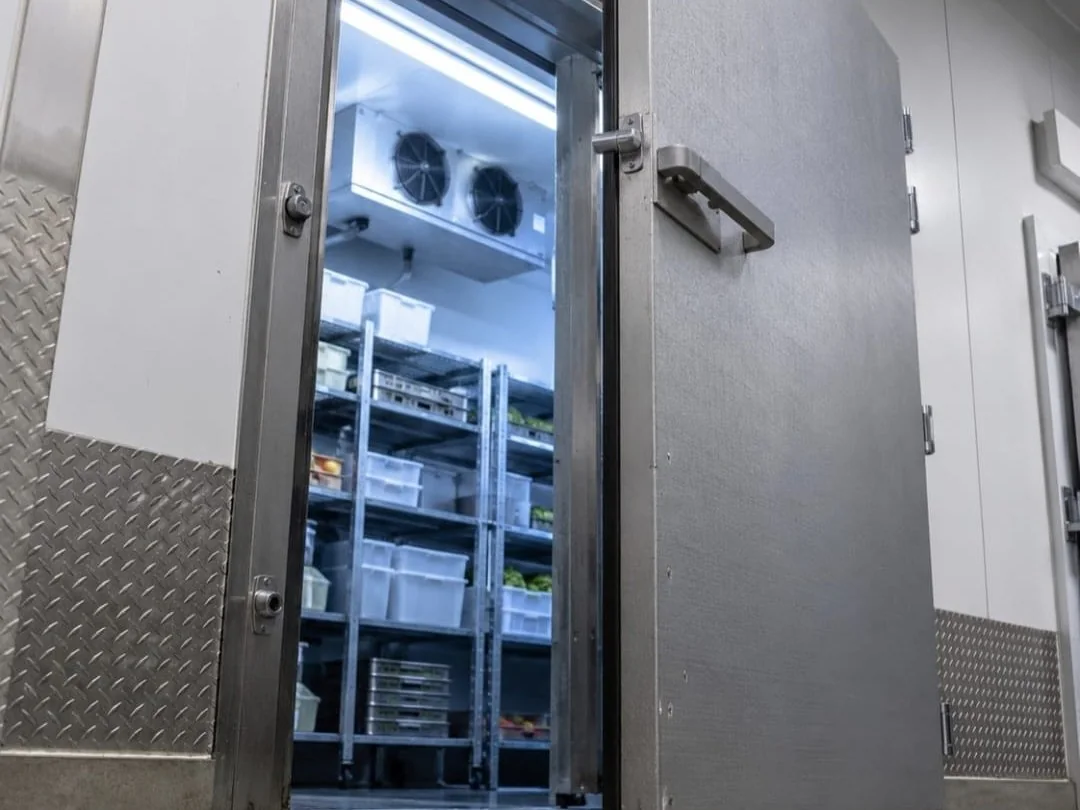
When people think of a "refrigeration fault", they picture a burned-out compressor or a refrigerant leak. Those happen, but not every day. What happens every day is a door: an employee who restocked the refrigerator at the end of a shift and didn't close it all the way, a crate left in the doorway, a seal that didn't catch. No component broke, and in the morning the stock is warm.
The difference between the two kinds of event is the difference in who can fix them: a compressor is fixed by a technician; a door is closed by whoever is on site, within a minute, at no cost. Provided someone knows.
What happened at a real customer
An active customer with eight refrigerators. In the first two days after installation, the system sent four genuine alerts about rising temperature. All of them had the same cause: a door left open. The customer had no idea it was happening at their site.
There was nothing to fix. There was only something to know.
Why a temperature sensor alone isn't enough for this
A sensor that measures the temperature of the product, via a glycerin bottle, reacts slowly on purpose: that way it doesn't alert on a normal door opening. But that same slowness means a door left open shows up in the product temperature only after some time. Meanwhile the cold air has escaped, the unit is running non-stop, and the stock is starting to warm up.
A sensor that measures the temperature of the air will alert immediately, but it will also alert on every normal opening, and after a week nobody will read the messages.
The door sensor resolves the contradiction. It doesn't ask "how warm is it?" but "how long has the door been open?" A normal opening closes before the set time passes, and nothing happens. A door left open crosses that time, and the alert goes out, with a clear cause and a clear action: close it.
← Why an air temperature sensor isn't enough, and what a glycerin bottle is
Comparison table: what each signal catches
| Door sensor | Product temperature | Evaporator temperature | |
|---|---|---|---|
| What is measured | Open or closed, and for how long | The temperature inside the glycerin bottle | The temperature at the indoor refrigeration unit |
| Normal door opening | Closes before the set time, no alert | No change | No significant change |
| Door left open | Alert, with the cause | Slow rise, later on | Unit runs continuously |
| Unit that stopped cooling | None | Alert when the product temperature rises | Early alert |
| What to do | Close the door | Check the stock | Call a technician |
| Included in basic monitoring | ✓ | ✓ | ✓ |
Together, the three signals tell you both "what happened" and "what to do". A single sensor only tells you "something happened".
How it works in the NITARTI system
Door status is part of basic monitoring, alongside product temperature, evaporator temperature, current and fans. You don't need extended monitoring to get it.
Two alert levels. A warning when the door has been open beyond the first time limit, and a critical alert when it's still open after a longer period. Both time limits are set with the customer at installation, and can be changed by contacting us.
A unit without a door sensor has no door alert. It's worth confirming this at installation: in the interface, a unit with a sensor shows a door widget. No widget, no sensor.
The temperature alert stays separate. It's based on an average of about ten minutes, so a normal door opening doesn't trigger it. When both a door alert and a temperature alert arrive, the order in which they arrive tells the story.
Alerts go to the channels the customer chose: SMS, email and app notification, to the recipients the customer set.
And if there's no signal from the unit: by default, the system sends a loss-of-monitoring alert after five minutes without a signal, to the same channels.
Temperature measurement accuracy: ±0.5°C. There's no accuracy to speak of for the door sensor. It's either open or closed.
← False alarms: why people stop taking a monitoring system seriously, and how to prevent it
What the door sensor doesn't do
It doesn't know why the door is open. A crate, a worn seal or an employee leaning on it: the alert is the same. The check happens on site.
It doesn't measure the temperature of the air that escaped. That's the job of the temperature sensors.
It isn't a locking or access-control system. It reports; it doesn't block.
It doesn't replace a seal. A door that closes but doesn't seal will show as closed. What will show, on the other sensors, is a unit running continuously and a product temperature that struggles to come down.
Questions and answers
What is door status monitoring in a refrigeration unit?
A sensor that reports whether the door is open or closed, and alerts when it stays open beyond a set time. It doesn't measure temperature.
Is a door alert sent on every opening?
No. The alert goes out only when the door stays open beyond the time period agreed with the customer. A normal opening closes before then.
Is the door sensor included in every package?
Yes, door status is part of basic monitoring. A unit without a door sensor installed has no door alert.
Who decides how long the door can stay open before an alert?
Both time limits, the warning and the critical alert, are set with the customer at installation. Changes are made by contacting NITARTI.
Why does the open-door alert arrive before the temperature alert?
Because the product sensor reacts slowly on purpose, so it doesn't alert on normal openings, and the temperature alert is based on an average of about ten minutes. The door sensor catches the cause before the effect shows up in the temperature.
Want to see this on your own equipment?
We'll set you up with a live demo and show you what the measurements look like on your units.
Request a demo